Partnership aims to improve response times at Silver Lake Sand Dunes

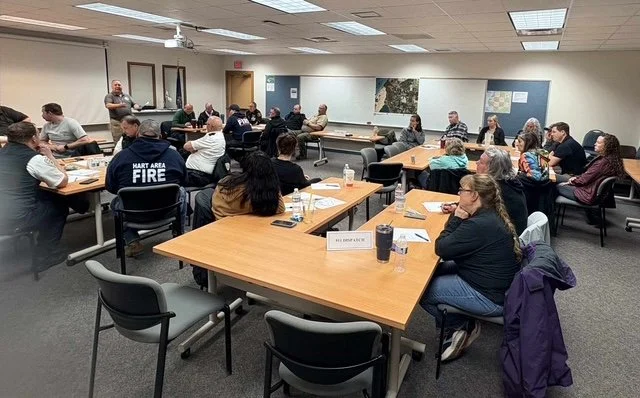
Photo courtesy of Trinity Health
Trauma leaders at Trinity Health Shelby and Trinity Health Muskegon have joined a multi-agency effort to improve response times for injured patients at Silver Lake Sand Dunes. The effort has already been proven to dramatically reduce emergency response and patient transport times for dune-related injuries.
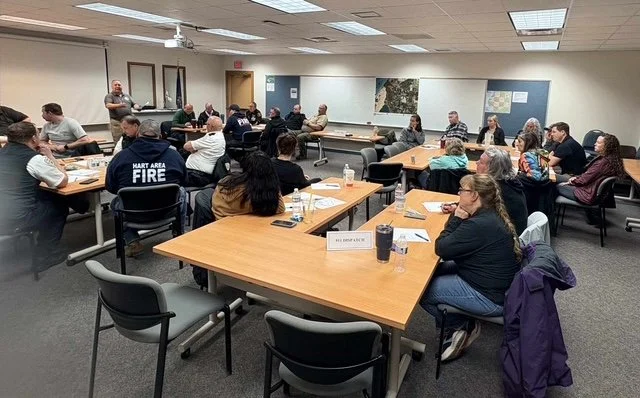
The Dune Extrication Plan was developed in 2025, with Trinity Health Shelby and Muskegon joining the Hart Area Fire Department (HAFD), the Oceana County Medical Control Authority, Life EMS and the Michigan Department of Natural Resources (DNR). The dunes, a popular off-road vehicle and recreation destination, have historically provided significant challenges to EMS response and transport times.
Previously, if someone was seriously injured at the dunes, DNR officers had to wait for the ambulance, which often had to travel long distances to the base of the dunes and then take the EMS crew to the incident location in a modified vehicle capable of navigating the difficult terrain. After EMS assessed and treated the patient, DNR transferred both the patient and EMS crew back to the ambulance at the base of the dunes. This process, from dispatching an ambulance to the ambulance leaving the scene with the patient, could take 1-2 hours.
The goal of the Dune Extrication Plan is to shorten this time, getting the injured person assessed and transported more quickly to an emergency facility for care.
Recognizing this need, community partners came together to develop this plan, with Trauma Program Coordinators from both Trinity Health Shelby and Trinity Health Muskegon lending their expertise to set attainable emergency response goals that would give patients their best chance at a successful outcome. They provided data analysis, evaluated state and national trauma expectations, and offered clinical expertise to develop meaningful solutions.
Since Memorial Day Weekend 2026, HAFD has provided dedicated medical response coverage on the Silver Lake Sand Dunes every weekend, cutting emergency response times in half, from 1-2 hours down to 31-38 minutes. Currently, HAFD staffs two Medical First Responders on the dunes from 10 a.m. to 10 p.m. each weekend. Their mission is to rapidly assess, stabilize, and transport sick or injured people from the incident location to the base of the dunes, where they are taken via ambulance to the most appropriate emergency facility.
“This project is a great example of how collaboration, data-driven decision-making, and a shared commitment to patient care can lead to positive change within a community,” said Angela Schiller, Trauma Program Coordinator, Trinity Health Shelby. “The commitment of our community partners has had a significant impact on response capabilities and patient access times, demonstrating how proactive local collaboration can improve care for injured patients.”
While the Dune Extrication Plan has achieved outstanding results, coverage is currently limited to summer weekends. The Dune Extrication Planning Committee recognizes that many busy days remain without dedicated HAFD dune staffing. Currently, Oceana County and Hart Area Fire Department funding supports the cost of staffing two Medical First Responders on the dunes each weekend. To sustain and potentially expand this level of service, several options are being explored, including additional state funding, local government support, community and business donations, and development of additional on-dune resources to assist during periods when HAFD is not staffed.
The committee remains committed to improving emergency response capabilities at the Silver Lake Sand Dunes and ensuring that residents and visitors continue to receive the highest level of care possible.

Community
- Ada
- Algoma
- Allegan
- Allegan County
- Allendale
- Alto
- Baldwin
- Baltimore Township
- Barry County
- Battle Creek
- Belding
- Belmont
- Benton Harbor
- Berrien Springs
- Bridgman
- Bryon Center
- Byron Center
- Caledonia
- Cannonsburg
- Carlton Township
- Carson City
- Cascade
- Cedar Springs
- Cloversville
- Comstock Park
- Coopersville
- Creston
- Crockery Township
- Douglas
- East Grand Rapids
- Eastmanville
- Eastown
- Eaton Rapids
- Fennville
- Ferrysburg
- Forest Hills
- Fruitport
- Georgetown Township
- Grand Haven
- Grand Rapids
- Grandville
- Greenville
- Hamilton
- Hart
- Hastings
- Hastings Township
- Holland
- Hope Township
- Hopkins
- Hudsonville