Students continue a 150-year scientific legacy rooted in Grand Rapids

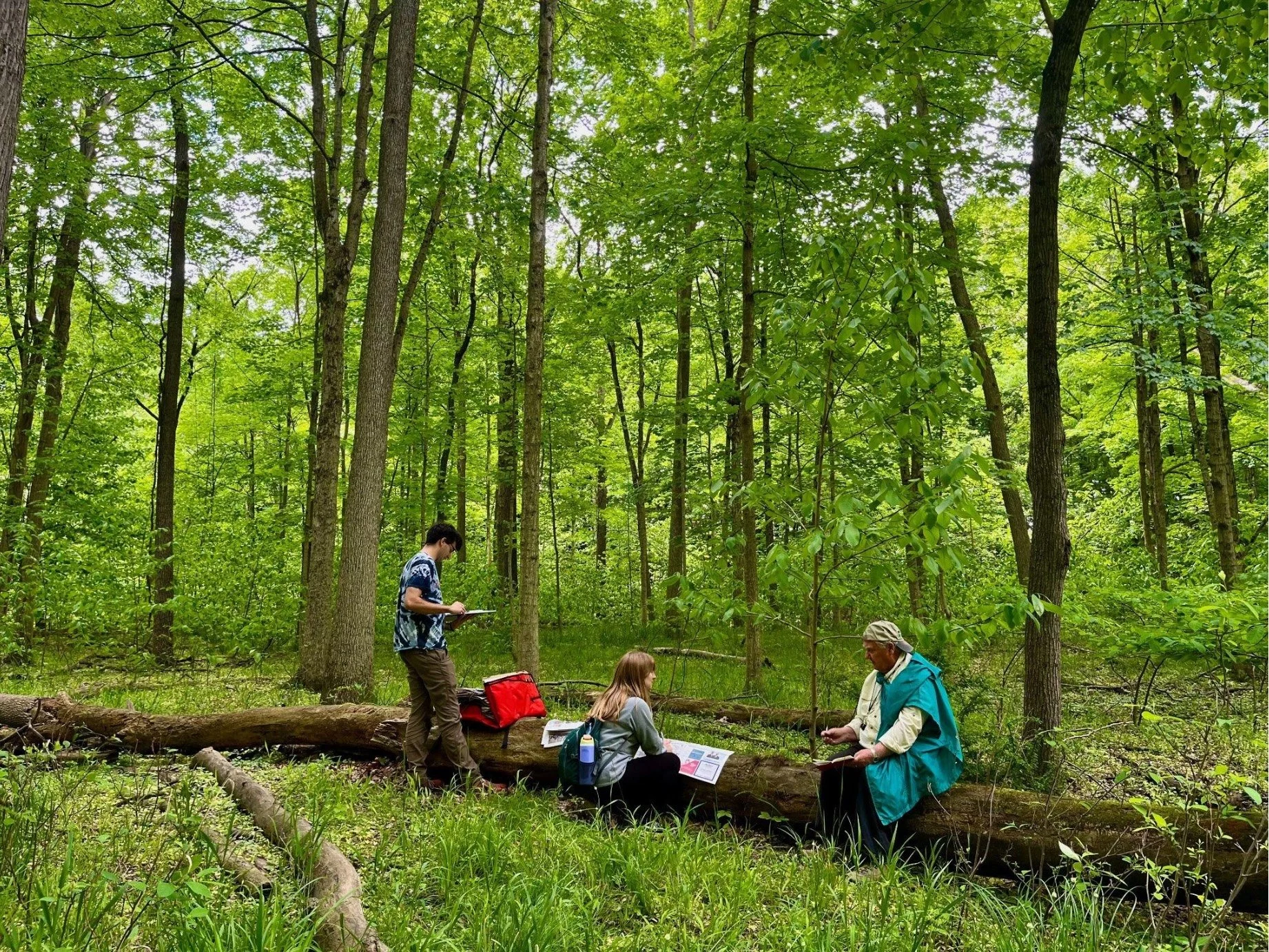
Photo courtesy of Calvin University
In a quiet wetland at a Kent County park this summer, a group of Calvin University students stood with sopping wet boots, swatting mosquitoes and carefully documenting a plant few people had ever noticed. The species, an extremely rare aquatic grass, was previously known from only one location in Michigan. Now, thanks to Calvin's field research team, scientists know there is at least a second thriving population.
It's one of several remarkable discoveries being made this summer through the Emma Cole Project. This research initiative simultaneously preserves the region's ecological future, provides transformative experiences for students, and continues a scientific story that began 150 years ago.
"This project is a beautiful example of how science builds over time, not only through discoveries, but through generations of people committed to understanding and caring for creation," said Dr. David Warners, Professor of Biology and Director of Plaster Creek Stewards, who leads the project.
The story begins with Emma Cole, a Grand Rapids scientist, educator, and botanist who, in the late 1800s, meticulously documented plant life throughout West Michigan.
Today, Calvin students are following in her footsteps. For the past several summers, teams of students and faculty have conducted modern botanical inventories throughout Grand Rapids city parks, comparing today's ecosystems with Cole's original observations from 150 years ago.
With funding from a U.S. Forest Service grant awarded to Friends of Grand Rapids Parks, Calvin researchers have spent the past two years helping city leaders understand which parks should be prioritized for preservation, ecological restoration, recreation development, or invasive species management.
"This is research that directly benefits our community," said Warners. "We're helping city and county leaders make informed decisions about the future of these landscapes."
The discoveries have been significant. Just a couple of weeks ago, at Wabasis Lake County Park, Calvin researchers documented three rare native species that had not been seen in Kent County since Emma Cole first described them in the late 1800s: Swamp gooseberry (Ribes hirtellum), Red swamp currant (Ribes triste), and Miterwort (Mitella nuda).
At another site, Spencer Forest County Park, students discovered the rare aquatic grass, now the second-known population in Michigan. Researchers will collect seeds and work to propagate the species to strengthen its future survival.
The team is also identifying invasive species never before documented in Kent County, allowing land managers to act before those plants spread and cause broader ecological damage.
While the discoveries are exciting, the project's greatest impact may be on the students themselves. Each summer, three Calvin students work alongside faculty members conducting field research throughout West Michigan. They learn to identify species, collect and analyze data, navigate scientific uncertainty, and communicate findings with real-world applications.
Students are co-authors on peer-reviewed publications, contribute to community reports, and gain hands-on experience that often shapes their future careers. Several former student researchers have gone on to graduate school in botany and related scientific fields.
“Learning about Emma Cole in class and then getting to continue her work has been really special,” said Maggie Sytema, senior Spanish and environmental health and conservation major at Calvin University. “As someone who loves plants, it's inspiring to carry on the legacy of a female botanist who began this work 150 years ago. It's also exciting to know that we're helping people better understand and care for the parks in our own community while discovering species and habitats many people don't even realize exist.”
Long days outdoors, difficult terrain, and clouds of mosquitoes are part of the experience. But that's also part of the lesson.
“Being out in the field every day has completely changed the way I think about science,” said Abigail Lindholm, a senior environmental health and conservation major. “We're not just identifying plants; we're helping document biodiversity that can support future conservation efforts throughout our community. It's been an incredible hands-on learning experience that you simply can't replicate in a classroom.”
The project also showcases the power of partnerships. Friends of Grand Rapids Parks, the City of Grand Rapids Parks Department, Kent County Parks, and Calvin University have created a model that benefits everyone involved.
“The Kent County Parks Department is incredibly grateful for the partnership with Calvin college and the Emma Cole Project,” said Ben Swayze, director of Kent County Parks. “As we plan how to increase and enhance accessibility to our nearly 8,000 acres of parkland, it is important to understand what we need to feature, and what we need to protect.”
The value of the work has become so evident that Kent County Parks has now committed funding for the next two years to expand the inventories across all county parks.
Technology is also expanding the project's reach. Dr. Peter Quakenbush, a former Calvin student who now serves as an adjunct professor at Grand Valley State University, has incorporated digital tools that make the research accessible to everyone. Through the iNaturalist app, residents can view species lists, explore photographs, and even contribute their own observations.
This research is a reminder that science is never the work of a single person or a single generation. Emma Cole began documenting these landscapes 150 years ago. Today, Calvin students continue her work.
West Michigan Newspop Digital Partners

Community
- Ada
- Algoma
- Allegan
- Allegan County
- Allendale
- Alto
- Baldwin
- Baltimore Township
- Barry County
- Battle Creek
- Belding
- Belmont
- Benton Harbor
- Berrien Springs
- Bridgman
- Bryon Center
- Byron Center
- Caledonia
- Cannonsburg
- Carlton Township
- Carson City
- Cascade
- Cedar Springs
- Cloversville
- Comstock Park
- Coopersville
- Creston
- Crockery Township
- Douglas
- East Grand Rapids
- East Hills
- Eastmanville
- Eastown
- Eaton Rapids
- Fennville
- Ferrysburg
- Forest Hills
- Fruitport
- Georgetown Township
- Grand Haven
- Grand Rapids
- Grandville
- Greenville
- Hamilton
- Hart
- Hastings
- Hastings Township
- Holland
- Hope Township
- Hopkins